Lee appoints top policy adviser after monthlong vacancy
President Lee Jae Myung has decided to press ahead with the appointment of Kim Ji-yong as the inaugural head of the Serious Crimes Investigation Agency, despite opposition from within the ruling party and the broader progressive bloc.
The presidential office said Thursday it planned to ask the National Assembly to hold a confirmation hearing for Kim as early as Thursday or Friday, reviving an appointment process that had been stalled since mid-September while the nominee underwent additional vetting.
The appointment process was put on hold after hard-line advocates of prosecution reform within the ruling Democratic Party and allied progressive circles called for Kim’s nomination to be withdrawn. Their objections include allegations that he had been aligned with former President Yoon Suk Yeol.
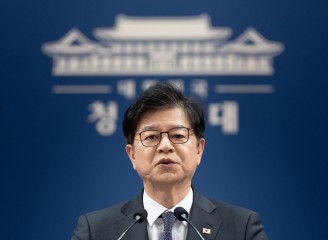
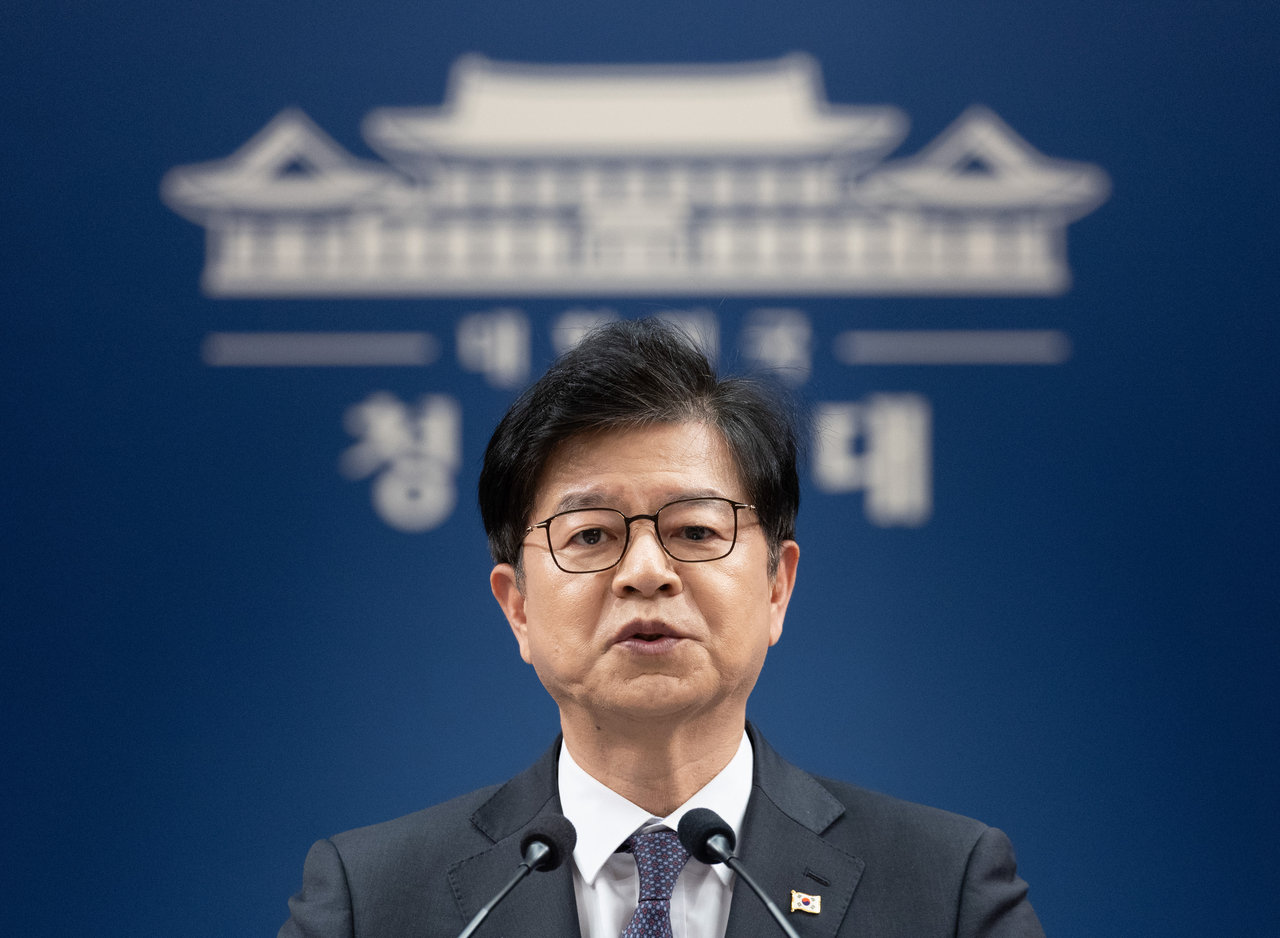
Senior Presidential Secretary for Public Relations and Communication Seong Ghi-hong said that “the additional vetting found nothing that would alter the findings of the initial review.”
“Some of the allegations raised were either inconsistent with the facts or amounted to little more than vague speculation,” Seong said during a televised press briefing on the matter. “We determined that they were not serious enough at this stage to strip the nominee of the opportunity to explain himself at a National Assembly confirmation hearing.”
Seong rebutted the allegations surrounding Kim point by point.
For instance, Seong rejected claims that Kim was a prosecutor aligned with Yoon, noting that Kim ordered a renewed investigation in 2021 into an alleged perjury case involving Yoon’s mother-in-law and was later transferred out of a senior post after the Yoon administration took office.
Cheong Wa Dae made the announcement a day before the launch of the Serious Crimes Investigation Agency and the Public Prosecution Service, as a sweeping overhaul of South Korea’s criminal justice system takes effect Friday.
The overhaul will abolish the original prosecution office after 78 years and formally separate its investigative and prosecutorial powers between the newly created agencies.
Interior Minister Yun Ho-jung recommended Kim for the post on Sept. 7 following a public selection process and approval by an independent candidate recommendation committee, and Lee nominated him the next day.
The nomination, however, soon drew criticism from prosecution-reform hard-liners, who questioned whether a career prosecutor should lead the agency.
Seong pushed back against that criticism, explaining that excluding Kim simply because he was a former prosecutor would defeat the purpose of the selection process and ignore the investigative expertise needed to establish the new agency.
“It is now time to put an end to unnecessary and exhausting debate that only adds to political turmoil and focus instead on the concrete tasks ahead for our criminal justice system,” Seong said.
The announcement came after Lee posted two lengthy messages on X between Wednesday night and early Thursday, directly pushing back against claims that Kim had been aligned with Yoon and rejecting calls to exclude a prosecutor from leading the agency.
More reshuffling
On the same day, Lee also appointed a new top policy adviser as part of an economic team reshuffle, while creating two new presidential advisory posts on peace and diplomacy and defense policy.
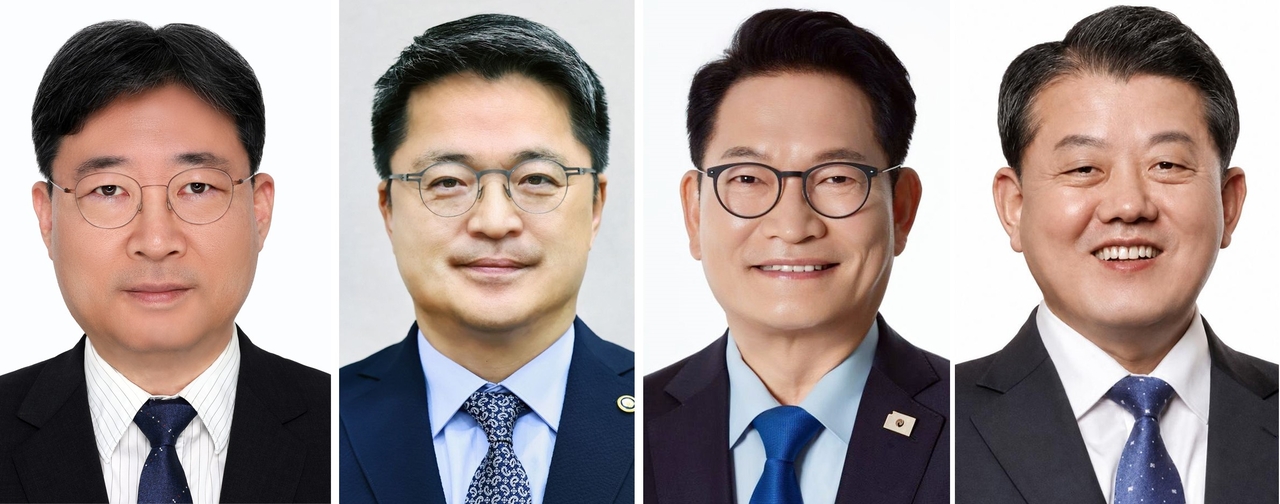
Lee named Ha Joon-kyung, his senior secretary for economic growth, as chief presidential secretary for policy, Seong said at a separate briefing. Ha succeeds Kim Yong-beom, who resigned Sept. 1.
“The policy chief who will steer the administration’s policies in its second year will place a strong emphasis on social policy, with a focus on tackling polarization and strengthening measures for ordinary people,” Seong said.
“Going forward, we expect him to oversee both social and economic policy and deliver tangible policy changes in areas directly affecting people’s lives, including welfare, jobs, education and housing.”
Ha is a leading scholar who has sought to incorporate “fair growth” and efforts to reduce polarization into broader growth strategies, according to Seong.
Lee tapped Moon Shin-hak, vice minister of trade, industry and resources, to succeed Ha as senior secretary for economic growth. Moon, who has held a series of senior posts overseeing industry and energy policy, is regarded as a specialist in the real economy.
“Based on his experience leading efforts to foster advanced industries such as semiconductors and artificial intelligence, he will move swiftly on new growth engines, including the three megaprojects, and help restore (Korea’s) potential growth rate through an execution-focused growth strategy,” Seong said.
Lee also created two new presidential special adviser posts covering peace and diplomacy and defense policy.
Six-term Democratic Party of Korea Rep. Song Young-gil was appointed special adviser for peace and diplomacy. Song previously chaired the National Assembly’s Foreign Affairs and Unification Committee and has accumulated extensive experience in foreign and inter-Korean affairs.
“Drawing on his accumulated legislative experience and diverse networks at home and abroad, we expect him to broaden the scope for diplomacy that advances the national interest from a balanced perspective,” Seong said.
Democratic Party Rep. Kim Byung-joo, a retired four-star Army general, was appointed special adviser for defense policy.
“Under the principle that strong defense capabilities are a key pillar in safeguarding the national interest, he is well suited to bring the public’s voice to national security and defense reform efforts,” Seong said.
dagyumji@heraldcorp.com

![[Legal updates in Korea] New insurance mandate protects firefighters on the job](https://wimg.heraldcorp.com/news/cms/2026/10/01/news-p.v1.20261001.76835f19eb424f18814ac3bb65d896a9_T1.jpg?type=h&h=800)